
Meeker County Arrest Reports
Meeker County posts no separate 72-hour or seven-day sheriff arrest log. Its official jail roster is a current-custody PDF with nothing to filter by date. Entries can carry old arrest dates. They vanish once custody changes. So the PDF fails as a stable multi-day ledger. For a wider window, try the Tri-County News sheriff archive. Dated issues sometimes print local blotter rows that county sheriff offices supply. A blotter row can preserve an arrest after the person leaves the roster. Editors still choose what runs. The paper is not a complete booking database.
Read the Meeker Arrest Blotter
A blotter row is news, not a custody status. Start with the issue date. Then work from the event date and location to the named agency. Check the roster only when current custody matters, since the two sources answer different questions.
- Open the Tri-County News Meeker County Sheriff's Office archive and select a dated item.
- Confirm the issue date and the event date or time printed in the row.
- Read the location and incident or arrest description before the charge line.
- Identify the agency that supplied the report. Newspaper coverage does not transfer custody authority to the publisher.
- Use the current roster for custody or contact Sheriff's Records for the underlying record.
For the newest bookings, start with the Arrested Today page. It checks the current roster and jail verification directly. The Tri-County News county archive adds local context.
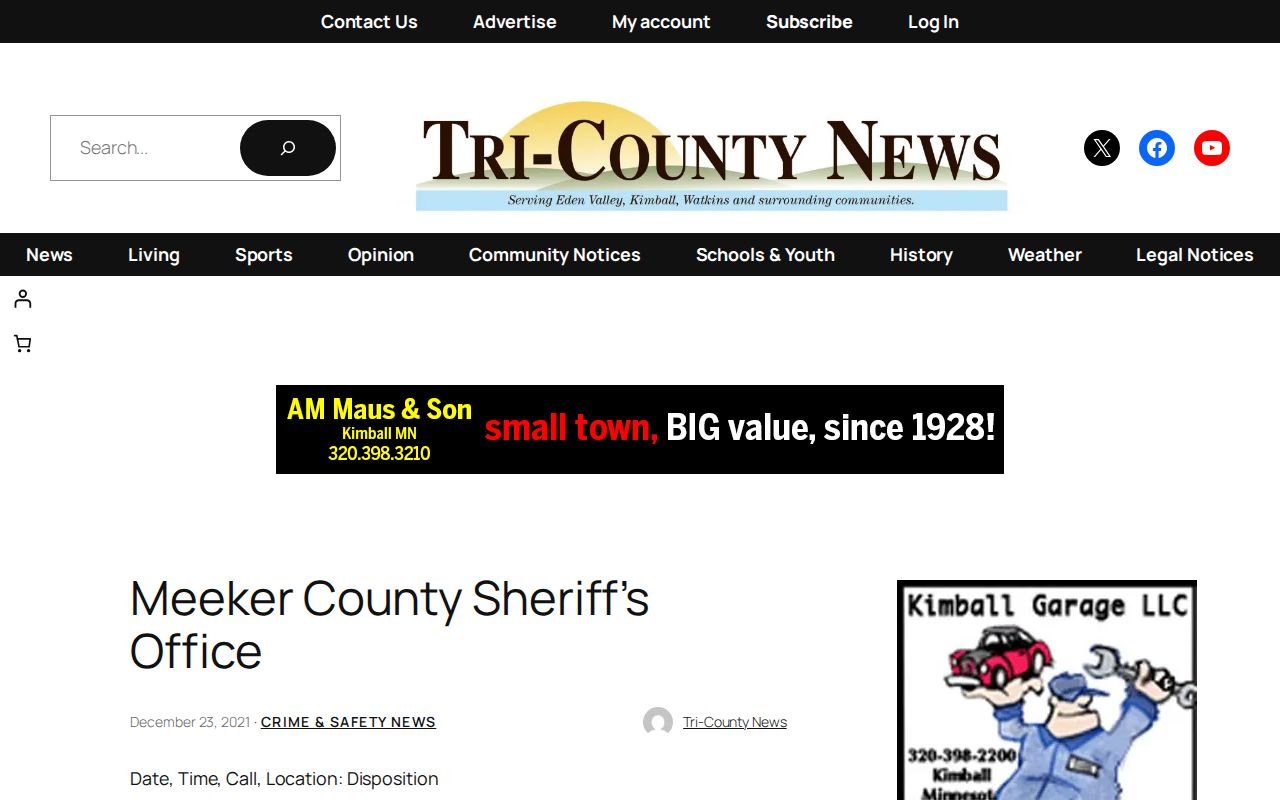
This news archive is secondary and dated, not a live or complete sheriff booking feed.
Meeker Arrest Report Fields
The Tri-County News blotter supplies more incident detail than the roster. Custody facts are weaker there. Photos are not promised in its rows. Never treat an editorial image as a booking photo unless the story says so plainly.
| Blotter element | How to interpret it |
|---|---|
| Date and time | When the reported event occurred, which may differ from the newspaper issue date. |
| Location | The reported place of the incident or arrest, not proof of present custody. |
| Name | The identity printed in the news row; verify it against the source record. |
| Incident or arrest | A short account selected for publication, not a full investigative report. |
| Charges | Charges reported at that stage, not a conviction or final disposition. |
| Source agency | The sheriff or other office that supplied the underlying public-safety information. |
The county roster lists different fields: Mugshot, Name & Address, Age, Sex, Race, Arrest Date/Time, Held For, and Charges. That set tracks jail status. A dated blotter instead helps rebuild a past report. Each source answers the question it was built for.
Meeker Weekend Arrest Reports
No Meeker source proves a weekend arrest surge or a holiday posting timetable. Claims of a bigger Monday report would be guesswork. Jail intake runs on its own clock. So do roster updates, agency record review, and newspaper printing. The custody PDF may carry a weekend arrest. A later issue may also run it, or the arrest appears in neither. When timing matters, trust the event date over the publication date. Then call the office handling the case. Custody can shift before the next issue prints. A news item can also linger online long after a release. Never mistake a wide date window for a custody tracker.
Note: An empty weekend archive does not prove zero arrests. Timing, selection, and publication limits can explain the gap.
Meeker Arrest Report Archives
Meeker County sets no fixed online photo duration or archive depth for arrest logs. The changing roster is not a permanent archive. Older jail register books may be kept or moved under Minnesota county records schedules. Those schedules don't promise that every digital booking photo survives forever. Ask for the schedule and record series first.
Start with Sheriff's Records at 320-693-5412. Say what you want. A jail register entry, an incident report, or a booking photo all count. Give the person's name, a date range, and the agency when known. Transferred records lead elsewhere: the Minnesota State Archives government-records service can help identify archival custody. Reach it at statearchives@mnhs.org or 651-259-3260.
Newspapers follow a separate track. Tri-County News, the Independent Review, and the West Central Tribune keep selected published reports. These are not whole sheriff files. The Minnesota Digital Newspaper Hub covers older Litchfield reporting, not current custody. Ask each holder what dates and series it keeps. Do not assume one archive fills every gap.
The State Archives guidance page shows the proper historical records path.

The archive service may not hold recent booking photos. Confirm the record series before visiting or requesting. Note: Vanishing from the current roster reflects a custody change, not destruction of the underlying arrest record.
Meeker Blotter Coverage Limits
A dated Tri-County News sample can tell you a fair amount about Meeker County arrests. It lists traffic stops, DWI events, and warrant-related entries. Names, locations, and reported charges appear too. What it cannot do is stand in for a full booking log. Some arrests in Meeker County simply never make the paper.
Other outlets play different roles. The Litchfield Independent Review public-safety topic leans archival rather than daily. So it works better for background than for tracking who was arrested this week. The West Central Tribune sheriff topic runs episodic regional stories picked for news value. Treat the images in those pieces as editorial photos unless a caption says otherwise.
Want a second dated view of county arrests? The Independent Review archive is worth a look.
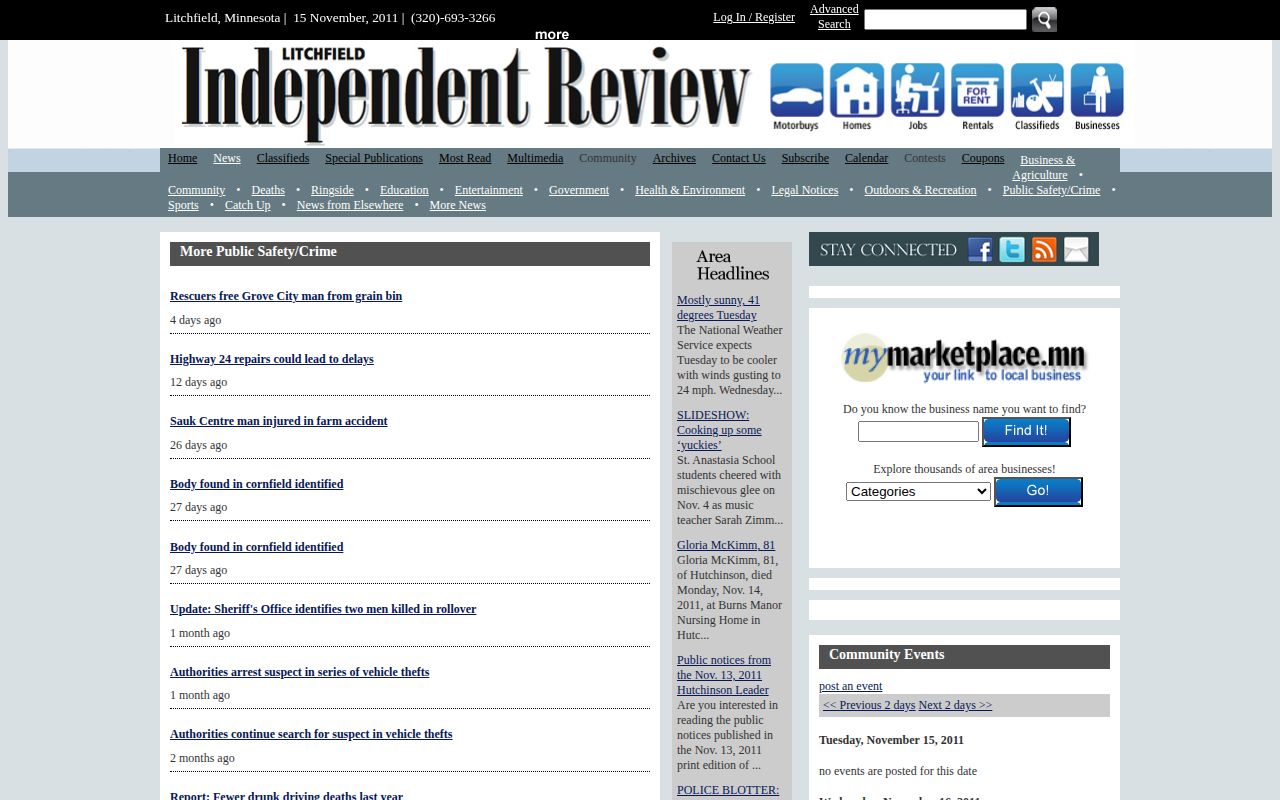
Check the date and sourcing on any blotter item before treating a Meeker County arrest report as current.
Meeker Arrest Trends Need Context
The local statistics on hand are bounded snapshots rather than a continuous Meeker County arrest trend. The sheriff's 2025 report describes jail population and average length of stay. A Litchfield report lists city arrest counts for 2020. Those years and measures do not mix. You cannot splice them into a busiest day, a current crime rise, or an agency-by-agency rate comparison. Each figure answers one narrow question. Context is everything. An arrest report simply logs one enforcement event, on one date, in one part of the county.